


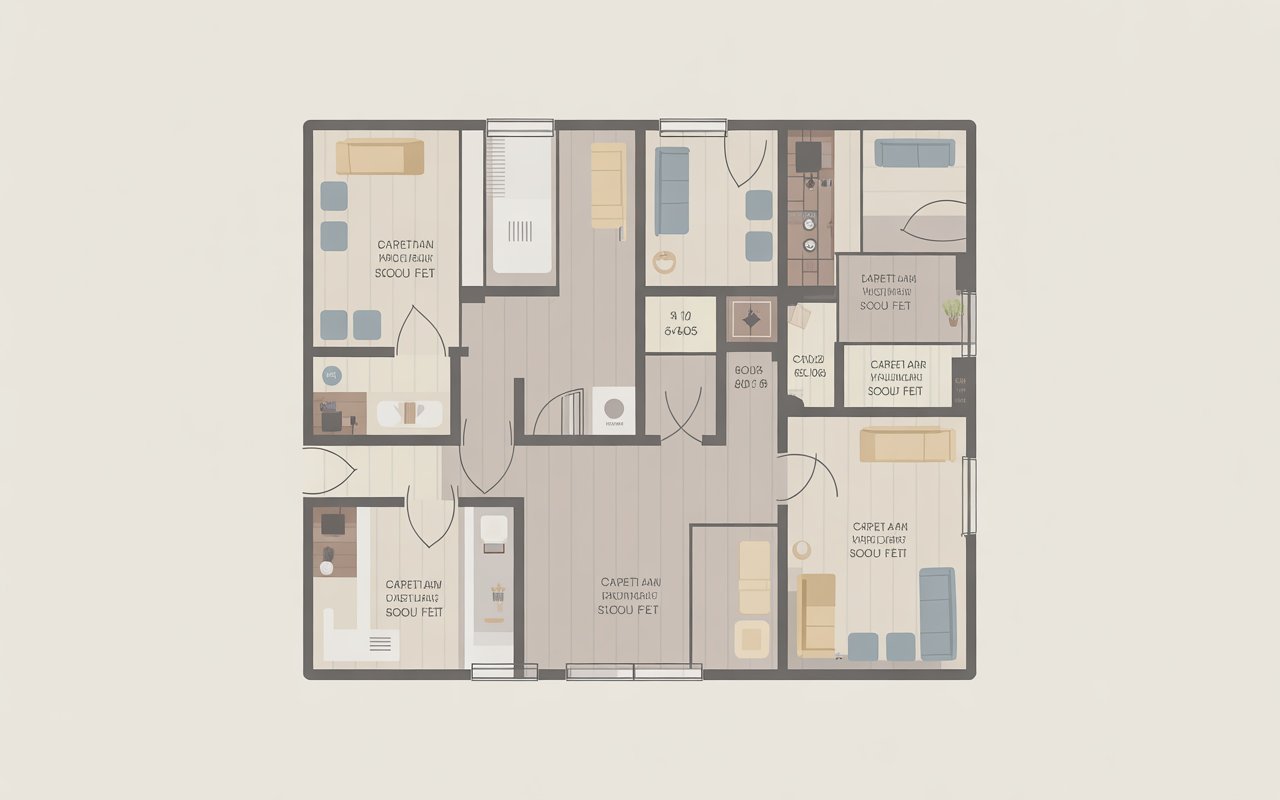
Most buyers spend less than a minute looking at a floor plan. But a floor plan can tell you far more than a site visit if you know where to focus. It shows how comfortable your daily life will be, how much usable space you’re getting and whether the home layout will work long term.
This guide simplifies how to read a Floor Plan confidently so you can make better decisions while shortlisting homes.
1. Start With the Actual Carpet Area
When evaluating any property, your first check should be the carpet area, not the super built-up number.
Carpet area is the space you actually use inside the home. Super built-up area includes staircases, lobbies and clubhouse loading, so it doesn’t represent your real living space.
Before comparing projects, always note:
- Carpet area vs built-up area
- Wall thickness
- Percentage loading
A slightly smaller flat with an efficient Floor Plan design can feel larger than a bigger home with wasted corners.
2. Check the Direction of Natural Light.
Natural light changes how spacious and warm a home feels. When reviewing a layout, find out where windows and balconies face.
Look for:
- Natural light direction
- East or north-facing windows
- Open the sides of the building
Rooms with good daylight feel more welcoming and reduce dependence on artificial lighting. This is one of the most important home-buying floor plan tips.
3. Evaluate the Flow Between Rooms.
A well-planned layout allows you to move through the home naturally. When studying the apartment layout, check how the kitchen, dining and living areas connect.
The ideal flow:
- Kitchen → Dining → Living
- Bedrooms placed away from the entry
- Washrooms not opening into common areas
Good movement flow creates long-term comfort and reduces daily inconvenience.
4. Check Privacy Between Bedrooms and Common Areas.
A smart Floor Plan guide for homebuyers always includes privacy checks. Bedrooms should not open directly into the living room. A small passage or buffer improves comfort for families, guests and remote workers.
Look for:
- Entry not facing bedroom doors
- The master bedroom is placed deeper into the layout
- Bathrooms not facing dining areas
This small detail makes a home feel peaceful and well-planned.
5. Study Window Placement and Ventilation Points.
Ventilation affects air quality, moisture control and overall comfort. Many buyers overlook this, but it is a key part of a quality home.
Check for:
- Ventilation in apartments
- Cross-ventilation (windows on opposite sides)
- Window size and placement
- Bathroom and kitchen vents
Homes with strong airflow remain fresher and more comfortable year-round.
6. Understand the Shape and Usability of Rooms.
Room shape matters more than room size. Square or slightly rectangular rooms offer better furniture placement and movement.
Avoid rooms with:
- Odd angles
- Cut corners
- Narrow long shapes
Visualize placing the bed, sofa, wardrobe or dining table. A good apartment floor plan analysis always includes this mental walkthrough.
7. Study the Entrance and Foyer Area.
A well-designed entrance sets the tone for privacy and comfort. The main door shouldn’t open straight into the seating area. A small foyer creates separation and makes the home feel more structured.
Check:
- Door direction
- Privacy from the entrance
- The first view when the door opens
Small layout details often define the long-term feel of the home.
8. Compare Usable Balconies vs Decorative Balconies.
Balconies are valuable only if they are usable. Many projects offer narrow balconies that cannot even fit a chair.
Look for:
- Balcony width
- Which room it is attached to
- Whether it faces open space
- Utility balcony availability
A functional balcony improves light, ventilation and lifestyle.
9. Bathroom Placement and Ventilation.
Bathrooms must have proper ventilation, especially in high-rise apartments. Also check if the bathroom placement feels practical.
Ideal placements:
- Ventilated through windows or ducts
- Guest bathroom is accessible from the common areas
- Master bathroom in the inner zone of the bedroom
Avoid layouts where bathrooms face the kitchen or dining areas.
10. Imagine Your Daily Life in the Layout.
The best way to understand a floor plan is to imagine living in it. Think about:
- Morning sunlight in the dining area
- Cooking movement from the kitchen to the dining
- Kids studying or playing
- Hosting friends
- Working from home zones
A good layout feels natural and balanced. A perfect-looking plan is not necessary; comfort is.
Why Floor Plan Reading Matters for Homebuyers.
Understanding how to read a Floor Plan helps you:
- Avoid layout-related problems later
- Compare properties confidently
- Choose homes that feel comfortable
- Make better long-term investment decisions
Most real estate mistakes happen because buyers judge only by size or price. A layout reveals the real quality of the home.
Final Thought
A smart homebuyer doesn’t rush through the floor plan. They decode carpet area, sunlight, movement flow, privacy zones and ventilation before deciding.
If you want a ready-to-use smart homebuyer floor plan checklist, just comment Floor Plan Checklist and I’ll send it.
Discover More with Bhagwati Group – See Projects
Your Next Address Awaits – Click Now