

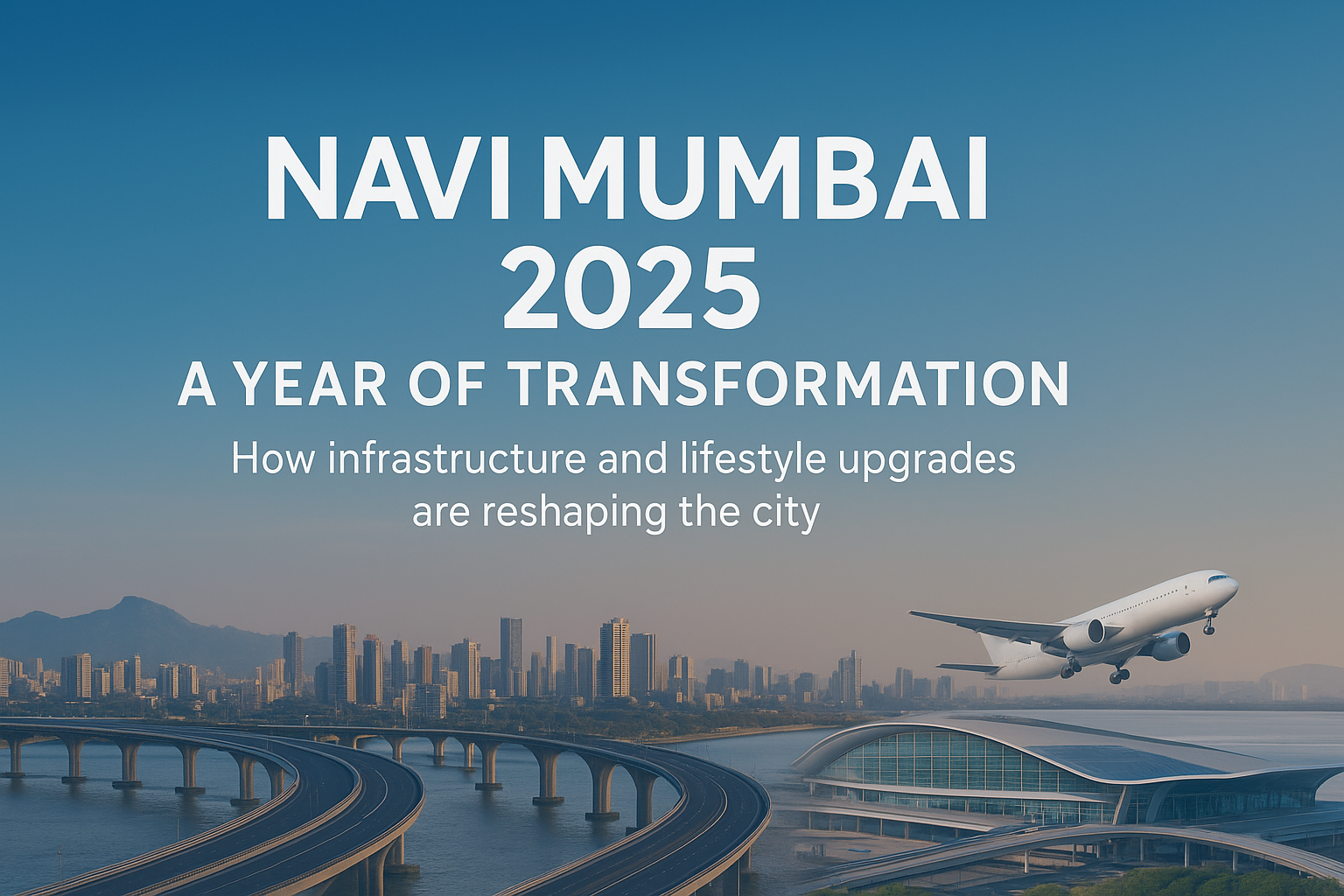
Navi Mumbai 2025 is entering a phase of massive transformation driven by infrastructure growth, airport readiness, and improved connectivity. With the MTHL connecting key business hubs, Navi Mumbai 2025 creates opportunities for homebuyers and investors seeking long-term value. The upcoming metro network and new commercial zones are expected to reshape the property market, making Navi Mumbai 2025 one of the most promising real estate destinations in India this year.
1. The Airport Era Begins Navi Mumbai 2025.
The biggest driver of change is the Navi Mumbai International Airport. With construction entering final stages and test operations progressing, the airport is reshaping surrounding micro-markets. Search interest for property near NMIA, flats in Ulwe and Pushpak Nagar projects is rising, showing how homebuyers and investors are positioning themselves early.
Localities such as Ulwe, Dronagiri, Pushpak Nagar and Taloja are seeing steady appreciation because buyers expect improved connectivity to Mumbai, Pune and global destinations. Once the airport becomes fully operational, this entire belt is expected to turn into a high-demand residential and commercial hub.
The airport also drives job creation, tourism, logistics and aviation-linked business opportunities. As a result, keywords like NMIA Airport updates and Navi Mumbai 2025 are trending across digital platforms.
2. Infrastructure That Boosts Growth.
One of Navi Mumbai 2025 strongest advantages is the quality and pace of its connectivity projects. These developments are improving daily travel and unlocking new real estate potential across major nodes.
Atal Setu (MTHL)
The MTHL impact Navi Mumbai is clearly visible this year. The sea link has reduced travel time to Mumbai, boosting confidence among working professionals who prefer Navi Mumbai’s planned lifestyle but need faster access to the city. This project is drawing interest toward nodes like Kharghar, Ulwe, Panvel and Kamothe.
Metro Line 1
The Navi Mumbai Metro update has had a positive effect on homebuyer interest. Line 1 is operational between Belapur and Taloja, improving last-mile commuting and reducing congestion. Real estate demand around metro-connected projects continues to rise as buyers prefer homes with easy daily travel.
Road and Corridor Development
Improved arterial roads, widened highways and upcoming corridors across Belapur, Kharghar, Ulwe, Turbhe and CBD are further strengthening the city’s growth story. These upgrades support long-term keywords such as Navi Mumbai infrastructure development and connectivity to Mumbai and Pune.
3. Residential Market Trends in 2025.
The residential market in Navi Mumbai is responding to changing lifestyle and space needs. Buyers in 2025 are looking for quality, community-focused living and access to green spaces. Navi Mumbai delivers this combination better than most cities in the region.
Localities such as Kharghar, Pushpak Nagar, Ulwe, Taloja and Dronagiri are seeing increased traction due to a mix of affordability and future appreciation. Townships and integrated living projects have become more popular as buyers prefer walkable communities with leisure amenities, work-from-home-friendly layouts and better privacy.
Search activity also shows rising demand for affordable housing Navi Mumbai and Navi Mumbai residential projects as developers launch new options across mid-income and premium segments.
4. Commercial and Business Expansion.
The commercial side of Navi Mumbai is evolving at a steady pace. With the airport approaching completion, sectors like logistics, warehousing and corporate offices are showing increased interest in the region. Locations such as Vashi, Belapur, Turbhe and Ulwe are shaping up as preferred business clusters.
Better access through the MTHL and metro is encouraging companies to view Navi Mumbai as a cost-effective, well-connected alternative to Mumbai. This is increasing search volume for terms like commercial property Navi Mumbai and office space near NMIA.
With retail centres, coworking spaces and mixed-use projects entering the market, 2025 is expected to bring more footfall and commercial activity across the city.
5. Lifestyle Improvements Strengthening Liveability.
One of Navi Mumbai’s strongest advantages is its planned layout. In 2025, the city continues to upgrade its public spaces, healthcare, education and entertainment facilities. Families gravitate toward Navi Mumbai because it offers a balanced routine, cleaner air and reliable transport systems.
Neighbourhoods across Kharghar, Belapur, Vashi, Ulwe and Panvel offer parks, walking tracks, lakes, sports complexes and community zones. The improvement of these lifestyle amenities supports search interest in best places to live in Navi Mumbai and Navi Mumbai lifestyle improvement.
The city’s social infrastructure is evolving quickly, making it one of the most preferred places for families across the Mumbai Metropolitan Region.
6. Investment Outlook for 2025.
For investors, 2025 presents a strong window of opportunity. With large projects nearing completion, capital appreciation looks promising in areas around the airport and metro corridors. Rental demand is rising across Kharghar, Ulwe and Panvel due to growing job opportunities and improved connectivity.
Navi Mumbai’s transformation is increasing interest from Mumbai, Thane and Pune buyers. Many are shifting to Navi Mumbai for better space, affordability and long-term returns.
7. Why 2025 Is a Turning Point.
Putting it all together, Navi Mumbai in 2025 stands out for several reasons:
- The airport is reshaping the development landscape
- The sea link has strengthened mobility
- Metro connectivity has improved internal travel
- Real estate demand is growing steadily
- Families prefer Navi Mumbai for quality living
- Businesses see long-term potential in the region
- Investors view 2025 as a high-opportunity year
The combination of planning, infrastructure and growth-driven projects is pushing the city toward a new era of progress. This is why terms like ‘Navi Mumbai transformation’ and ‘Navi Mumbai real estate’ are becoming central to online search patterns.
Conclusion.
Navi Mumbai’s transformation in 2025 isn’t just a phase. It’s the beginning of a long-term growth cycle. With massive infrastructure investments, rising demand, growing commercial activity and a strong lifestyle advantage, the city is positioning itself as one of India’s most promising destinations for homebuyers and investors.
Whether you’re looking to move into a well-planned community, invest near the airport belt or explore commercial opportunities, Navi Mumbai offers a future-ready environment that continues to grow in value and liveability.