

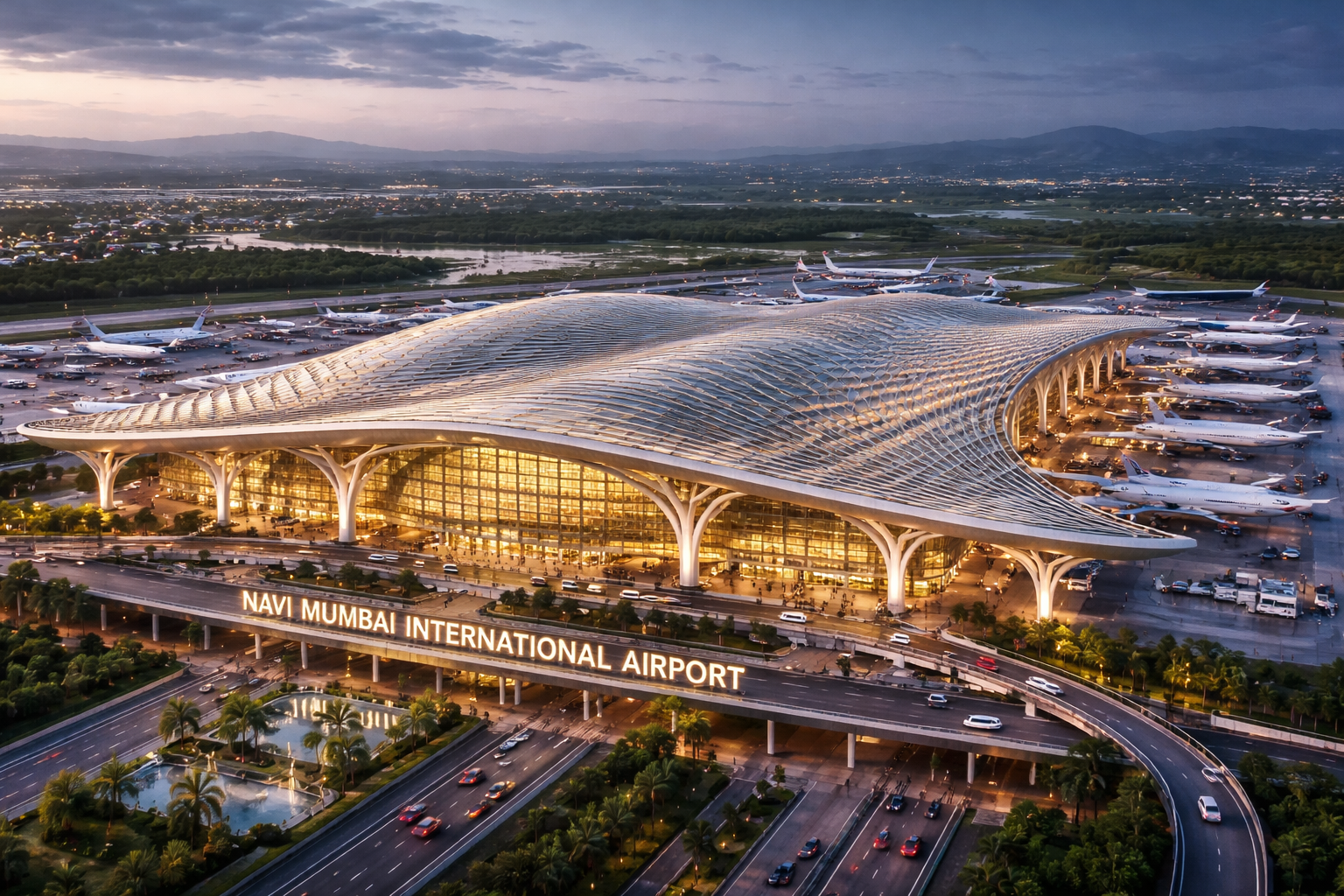
The Airport Effect is no longer just a theory — it is a visible reality in Navi Mumbai. For a long time, the city was viewed as Mumbai’s well-planned but quieter neighbour. Better roads, more open spaces, and structured development were always its strengths, yet growth felt gradual. That phase is ending. The Navi Mumbai International Airport (NMIA) is accelerating change at a scale the city has never seen before.
This transformation is what truly defines The Airport Effect. It goes far beyond air travel — it reshapes skylines, redefines property value, and changes how a city functions and is perceived.
Understanding The Airport Effect
Across global cities, international airports have acted as economic anchors. They attract investment, create employment, and drive infrastructure development around them. What makes NMIA different is timing. Navi Mumbai is still evolving, which means the airport is becoming part of the city’s foundation, not an afterthought.
This allows growth to happen in a planned, structured way rather than through congestion-driven expansion.
Why NMIA Changes Everything
NMIA is designed to decongest Mumbai while positioning Navi Mumbai as a global gateway. Its location near Ulwe, Panvel, Kamothe, Pushpak Nagar and Dronagiri connects it directly to upcoming residential, commercial, and logistics zones.
With strong road, rail, and sea connectivity, the airport supports more than passenger movement. It strengthens trade, corporate travel, cargo operations, and international business access.
This single project has shifted how developers, investors, and homebuyers evaluate Navi Mumbai.
A New Skyline Is Taking Shape
Before NMIA, Navi Mumbai’s skyline consisted largely of mid-rise residential developments. Today, the landscape is evolving rapidly.
We are seeing:
- Taller residential towers with modern planning
- Mixed-use developments integrating homes, offices, and retail
- Business parks, hotels, and serviced residences
- Better architectural design focused on views, light, and open spaces
Areas like Ulwe, Airoli, and Panvel are no longer considered peripheral. They are emerging as future ready urban zones.
Real Estate Shift: From Value Buying to Long-Term Vision
Earlier, Navi Mumbai attracted buyers mainly due to affordability and space. NMIA has changed the buyer mindset.
Today’s buyers look for:
- Long-term appreciation potential
- Proximity to future employment hubs
- Lifestyle amenities and better planning
- Connectivity to Mumbai and global destinations
Property growth around airports typically follows steady appreciation rather than short term spikes. Navi Mumbai is showing similar patterns, making it attractive for both end users and investors.
Infrastructure Growth Beyond The Airport Effect.
NMIA has triggered multiple infrastructure upgrades across the region:
- New highways and improved arterial roads
- Mumbai Trans Harbour Link is improving access to South Mumbai
- Metro corridors are strengthening internal connectivity
- Planned social infrastructure, including schools, hospitals, and retail zones
This layered development ensures Navi Mumbai grows as a complete city, not just a residential extension.
Lifestyle Evolution in Navi Mumbai
As infrastructure improves, lifestyle expectations rise.
Developers are focusing on:
- Clubhouses, fitness spaces, and landscaped areas
- Sustainable construction and efficient layouts
- Community-driven planning rather than isolated buildings
The city’s skyline is not only growing vertically. It is becoming smarter and more liveable.
Employment and Economic Momentum
NMIA is expected to generate thousands of direct and indirect jobs across aviation, logistics, hospitality, IT, and retail sectors. This reduces dependence on Mumbai for employment and shortens commute times for residents.
Cities grow stronger when people can live close to where they work. NMIA makes this a reality for Navi Mumbai.
What This Means for Investors
Infrastructure-led growth is one of the strongest indicators of future value. Airports, in particular, attract sustained development.
Navi Mumbai offers:
- Planned urban development
- Early-stage investment opportunities compared to mature markets
- Strong government-backed infrastructure
- Growing demand from professionals and businesses
For investors, timing matters. The Airport Effect is already underway.
Looking Ahead
Over the next decade, Navi Mumbai’s skyline will reflect a confident, globally connected city. NMIA is not just adding terminals and runways. It is adding momentum, visibility, and long-term relevance.
What was once considered an alternative to Mumbai is becoming a destination in its own right.
Final Thoughts
The Airport Effect is real, and Navi Mumbai is living through it.
NMIA is redefining how the city looks, grows, and competes on a global scale. For homebuyers, investors, and businesses, the future of Navi Mumbai is no longer distant. It is already taking shape.