


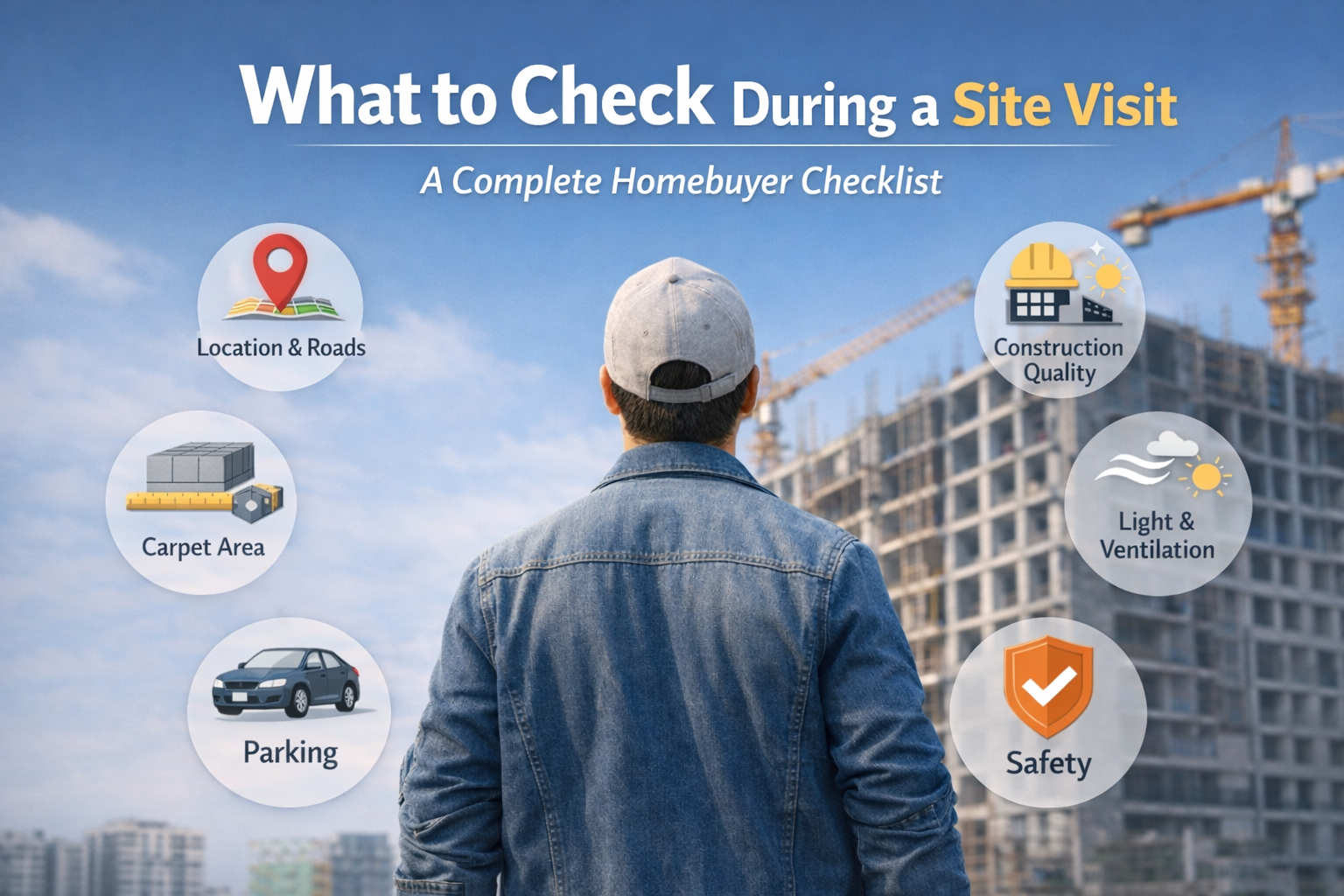
Site Visit is where a property truly reveals itself. No matter how attractive a brochure looks or how convincing an online listing sounds, the real decision begins when you step onto the site. For homebuyers, especially in today’s fast-moving real estate market, a site visit is not a formality — it’s a critical evaluation step.
Many buyers focus only on price, floor plans, or offers during a visit. That often leads to regrets later. A smart site visit looks beyond the surface and checks factors that affect daily living, long-term value, and peace of mind.
This complete homebuyer checklist will help you evaluate a property thoroughly and confidently.
Why Site Visit Matter More Than Ever
With growing construction activity and multiple projects launching simultaneously, buyers have more choices but also more risk. A site visit helps you verify what is promised and identify what is not mentioned.
A proper Site Visit allows you to:
- Assess actual construction quality
- Understand the surrounding environment
- Check access, infrastructure, and liveability
- Verify legal and planning details
- Visualize long term comfort and resale potential
Skipping or rushing this step can turn an exciting purchase into a stressful experience.
1. Location and Surrounding Infrastructure
Begin your site visit by observing the area around the project.
Check:
- Road connectivity to major highways and work hubs
- Traffic flow during peak morning and evening hours
- Proximity to schools, hospitals, markets, and public transport
- Noise levels from traffic, railways, or industrial activity
- Cleanliness and civic maintenance
Also look for upcoming infrastructure such as metro lines, flyovers, or commercial zones. These significantly influence future property value.
2. Approach Road and Accessibility
How you reach the property every day matters more than you think.
Observe:
- Width and condition of the approach road
- Waterlogging or drainage issues
- Street lighting and safety at night
- Ease of entry for vehicles and pedestrians
A poorly planned approach road can become a daily inconvenience and impact resale value.
3. Project Layout and Planning Quality
Ask for the approved master layout and compare it with what exists on site.
Check:
- Distance between buildings
- Open and green spaces
- Placement of amenities
- Internal roads and fire access
- Pedestrian movement and safety
Well planned layouts offer better ventilation, privacy, and overall quality of life.
4. Construction Quality and Materials
Even if construction is ongoing, quality indicators are visible.
Look for:
- Neatness and organisation of the site
- Quality of columns, slabs, and wall finishing
- Waterproofing work in basements and terraces
- Safety measures for workers
Ask which brands are used for cement, steel, electrical wiring, plumbing, and waterproofing. Reliable developers are transparent about materials.
5. Flat Orientation, Light, and Ventilation
If you can visit a sample flat or actual unit, spend time inside.
Check:
- Direct the flat faces
- Natural daylight in living spaces
- Cross ventilation between rooms
- Heat exposure during afternoons
- Privacy from nearby buildings
Good ventilation improves comfort, reduces energy costs, and enhances long term liveability.
6. Carpet Area and Space Usability
Do not rely only on brochure figures.
During the visit:
- Understand the actual carpet area
- Visualise furniture placement
- Check room proportions
- Identify wasted or awkward spaces
Usable space matters more than numbers on paper.
7. Amenities: Practical or Just Promotional
Amenities are a major selling point, but they should be usable.
Verify:
- Actual size and location of amenities
- Whether amenities are shared or exclusive
- Completion timeline
- Maintenance responsibility
Amenities should enhance daily life, not just look good in advertisements.
8. Parking and Internal Traffic Flow
Parking impacts everyday convenience.
Check:
- Type of parking provided
- Ease of vehicle movement
- Turning radius in basements
- Visitor parking availability
- Separate entry and exit points
Poor parking planning often becomes a long-term frustration for residents.
9. Safety and Security Systems
Safety is non-negotiable.
Look for:
- CCTV coverage in common areas
- Security cabin placement
- Boundary walls or fencing
- Fire safety systems and exits
- Emergency evacuation planning
Ask about security staffing and access control systems.
10. Water Supply, Power Backup, and Utilities
Ask clear questions about daily essentials.
Confirm:
- Source of water supply
- Backup water arrangements
- Power backup coverage
- Sewage and waste management
- Internet and cable readiness
Utility issues affect daily living more than luxury features.
11. Legal Approvals and Documentation
Never ignore legal verification during a site visit.
Ask for:
- RERA registration details
- Approved building plans
- Commencement certificate
- Occupancy certificate timeline
- Possession commitment
A trustworthy developer will provide documents without hesitation.
12. Developer Reputation and Track Record
Use the Site Visit to evaluate the developer’s credibility.
Check:
- Completed projects
- Construction quality in older developments
- Delivery timelines history
- Maintenance standards
If possible, speak with residents from previous projects.
Common Mistakes Buyers Make During Site Visits
Avoid these errors:
- Rushing through the visit
- Ignoring the neighbourhood
- Focusing only on offers and discounts
- Not asking technical questions
- Skipping legal checks
A careful site visit can save years of stress.
Tips for a Smarter Site Visit
- Visit at different times of day
- Carry a checklist and take notes
- Take photos and short videos
- Ask direct questions and note answers
- Never feel pressured to decide immediately
Final Thoughts
Buying a home is not just a financial decision. It is a lifestyle choice.
A well-planned site visit helps you move beyond marketing claims and see the real picture. It gives you clarity, confidence, and control over one of the most important investments of your life.
Use this checklist during every site visit. A good property will stand strong on the ground, not just on paper.